
News and Events
The robotics industry is constantly changing and evolving. New robotics technologies and developments in automation are quickly creating exciting career opportunities at every education level – from micro-credentials to PhDs. Here is where you can learn more about robotics careers in manufacturing and how these new technologies are benefiting workers
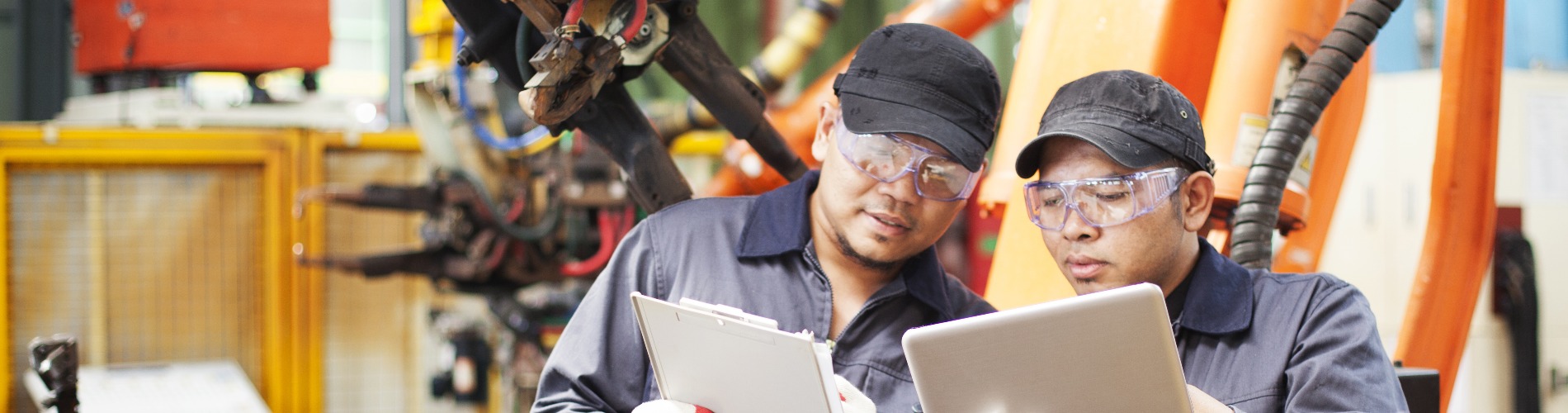

NEWS
How Robotics Specialists are Shaping Industries and Creating Jobs
August 11, 2023Robotics specialists are highly skilled professionals who play a vital role in shaping automation and innovation. At times, the role is referred to as Robotics Engineer, Mechatronics Engineer, or Automation Engineer. Their expertise in robotics systems, programming, and implementation is invaluable to industries eager to leverage the potential of technology.
As industries strive to adapt and thrive in the digital era, robotics specialists' impace on the industry is driving progress and revolutionizing the way we work.
The Impact of Robotics Specialists is Revolutionizing Industries
Working hand-in-hand with robotics technicians and robotics integrators, robotics specialists have a considerable impact on the efficiency and innovation of a manufacturing floor.
The robotics specialist is responsible for designing, developing, and implementing robotic systems and technologies to enhance the efficiency, productivity, and functionality of a manufacturing system. The role is critical to advancing automation capabilities and driving innovation in robotics.
The Impact of robotics specialists can be seen in the management and optimization of the entire manufacturing system. They are responsible for understanding how the various components of a system interact with each other and work in tandem for the highest productivity. Their duties include identifying areas for redesign to increase productivity and profitability and recommending the changes.
They also need to have a deep understanding of advanced robotics programming in manufacturing, troubleshooting, and the operation of various machines and sensors on the manufacturing floor.
Robotics specialists also need to perform regular safety risk assessments, update safety procedures, and conduct quality assurance through regular system inspections. They have soft skills such as communication, problem-solving, leadership, and critical thinking, with a particular emphasis on communicating with the executive team about changes to increase efficiency and productivity.
While hands-on training is crucial for this role, it is generally recommended that robotics specialists have a four-year bachelor's degree, due to the broad scope of their responsibilities.
Challenges and Future Directions in Robotics: Navigating the Path Ahead
Robotics specialists face exciting challenges and drive the field towards promising directions. But with these challenges comes the opportunity for robotics specialists’ impact on the manufacturing industry to be even greater.
Key areas include:
- Ethical Considerations and Social Impact: As robotics advances, specialists navigate the ethical implications of autonomous systems, ensuring safety, privacy, and responsible use. They develop guidelines and frameworks for responsible robotics.
- Collaboration with the Human Workforce: Specialists design systems for seamless human-robot collaboration, optimizing productivity and safety. They address challenges in task allocation, intuitive interfaces, and effective teamwork.
- Advancements in Artificial Intelligence and Machine Learning: Robotics specialists integrate AI and ML algorithms to enhance perception, decision-making, and adaptability. This enables robots to learn, improve performance, and adapt to dynamic environments.
- Autonomous Systems and Mobility: Specialists develop autonomous systems for complex environments like self-driving cars and unmanned aerial vehicles. They tackle challenges in sensor fusion, path planning, and robust control.
- Human-Robot Interaction and User Experience: Specialists focus on designing user-friendly interfaces, language processing, and haptic feedback. They aim to enhance human-robot interaction.
As robotics evolves, specialists will shape the field by addressing these challenges and embracing ethical considerations, collaborating with humans, leveraging artificial intelligence (AI) and machine learning (ML), advancing autonomy, and enhancing human-robot interaction. Exciting breakthroughs in robotics technology lie ahead.
Inspiring a Future of Innovation: Robotics Specialists' Impace on Shaping Industries and Minds
Robotics specialists are pioneers in the field, inspiring innovation and pushing the boundaries of what is possible. Their deep understanding of robotics technology, coupled with their creative problem-solving skills, allows them to explore new frontiers. By embracing emerging technologies, such as AI and ML, robotics specialists continue to drive advancements and shape the future.
Start a search and get started on your own career path today.
About The Author
John Zappa
John Zappa is the Director of Product Management at the Advanced Robotics for Manufacturing (ARM) Institute. In this role, he is responsible for developing and promoting services that help the organization fulfill its mission to train and empower the manufacturing workforce for careers in robotics.
An industry expert on lifelong learning, John has spoken at numerous industry conferences including Chief Learning Officer Symposium, Society of Human Resource Management, and The Conference Board, and has co-authored articles on corporate tuition assistance programs and talent management.
During his career, he helped to found and serve as CEO of EdLink, LLC a leading provider of tuition assistance management services. Under John’s leadership, EdLink grew to manage over $220 million in education funding. The firm was acquired by the Fortune 500 firm Bright Horizons Family Solutions (BFAM). A pioneer in the field, he created the industry’s first education network to address the rising cost of education for adult learners. It is now considered the industry standard.
With thirty years’ experience, John has built and led marketing, operations, and product management teams in software-based companies across multiple industries. John began his career at IBM implementing robotics as a manufacturing engineer. He received his Bachelor of Science Degree with University Honors in Mechanical Engineering at Carnegie Mellon University and his MBA from Dartmouth College.

RoboticsCareer.org is powered by the ARM (Advanced Robotics for Manufacturing) Institute, a Manufacturing Innovation Institute part of the Manufacturing USA Network. RoboticsCareer.org was created through collaboration with the ARM Institute’s member organizations spanning industry, government, and academia. Funding was provided by the U.S. Department of War and a grant from the U.S. Department of Labor.
