
News and Events
The robotics industry is constantly changing and evolving. New robotics technologies and developments in automation are quickly creating exciting career opportunities at every education level – from micro-credentials to PhDs. Here is where you can learn more about robotics careers in manufacturing and how these new technologies are benefiting workers
NEWS
The Future of Modern Manufacturing Isn’t What You Think
By John Zappa | July 18, 2022When you think of manufacturing, you probably think of a lot of big, noisy machines and sweaty workers in heavy aprons wielding hammers. If your imagination is a little more modern, maybe you picture giant robotic arms and sparks flying in cramped assembly lines.
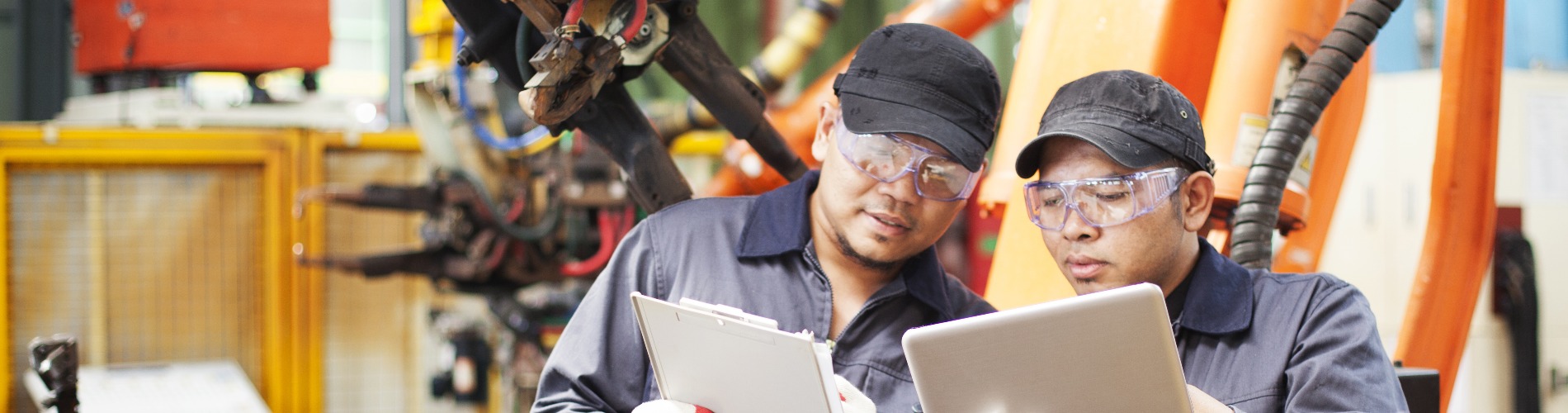
No matter how your imagination pictures it, modern manufacturing probably defies your expectations. The industry of 2026 is sleek, modern, high-tech, and efficient. With a people-first focus, robots and humans work together to make the goods we use every day.
What Manufacturing Used to Be Like
If those images we conjured above resonate with you, that's for a good reason: it used to be a lot closer to how things actually were. The manufacturing industry has been around for centuries, and it used to be a very different place. Let's take a look at how manufacturing has changed over time.
The Early Days
Manufacturing first began in the homes of artisans and craftsmen. These early manufacturers were often one-man operations, working alone to produce goods such as furniture, pottery, and metalwork. The manufacturing process was very slow and labor-intensive. It could take weeks or even months to complete a single product.
With the advent of the Industrial Revolution in the late 1700s, manufacturing began to move out of homes and into factories. This new type of manufacturing was powered by machines instead of manual labor. This allowed for a much faster production process. It also required workers with less training, which helped to lower manufacturing costs.
The Industrial Revolution was a time of great change for the manufacturing industry. New technologies and methods were developed that would shape the processes for years to come and much of what future eras of modern manufacturing would look like.
The Modern Era
Today, manufacturing is a high-tech industry that relies on advanced technologies to create products. Robotics, computer-aided design (CAD), and artificial intelligence are just a few technologies used in modern manufacturing. These technologies allow for a more efficient and precise manufacturing process.
Technology is continuously improving manufacturing efficiency and accuracy. For example, 3D printing is used to create prototypes and small-batch production runs of products. This helps to speed up the manufacturing process and reduces waste. But it's not just tech that improves things but people, too.
The manufacturing industry has always been a people-first industry. It's the hard work of skilled workers that keeps the manufacturing process moving. In recent years, there has been a renewed focus on attracting and retaining manufacturing talent. This is being done through initiatives like apprenticeship and internship programs and career fairs. And this is something that we will continue to see in the future of modern manufacturing.
The Future of Modern Manufacturing
The manufacturing industry is always changing. New technologies and processes are being developed that will shape the manufacturing landscape for years to come. The COVID-19 pandemic underscored the importance of manufacturing to the U.S. We expect continued investment in manufacturing, both in technology and in workers.
Walk through a modern factory, and you won't find what most people expect. AI handles a lot of the behind-the-scenes work now, flagging maintenance issues early and keeping production moving efficiently. Cobots have become a normal part of that picture too, built specifically to operate alongside workers rather than around them. The industry hasn't lost its human element. It's just changed what that looks like.
The jobs reflect that shift. There's no shortage of openings right now for people who understand robotics and automation — technicians, engineers, integrators. These aren't niche positions anymore. They're central to how manufacturing gets done, and there aren't enough trained people to fill them yet.
Join the Future of Modern Manufacturing With a Career in Robotics
A career in manufacturing is a great way to be a part of the exciting future of modern manufacturing. And there's no better place to start than in robotics. Robotics is a growing field that is revolutionizing manufacturing.
If you're interested in joining the next generation of manufacturing as a robotics maintenance technician or production worker, or systems integrator, you've come to the right blog space. RoboticsCareer.org can sort through a database of thousands of robotics training and education programs throughout the country to find the best fit for you. Create a profile today and become a part of the future of modern manufacturing.
About The Author
John Zappa
John Zappa is the Director of Product Management at the Advanced Robotics for Manufacturing (ARM) Institute. In this role, he is responsible for developing and promoting services that help the organization fulfill its mission to train and empower the manufacturing workforce for careers in robotics.
An industry expert on lifelong learning, John has spoken at numerous industry conferences including Chief Learning Officer Symposium, Society of Human Resource Management, and The Conference Board, and has co-authored articles on corporate tuition assistance programs and talent management.
During his career, he helped to found and serve as CEO of EdLink, LLC a leading provider of tuition assistance management services. Under John’s leadership, EdLink grew to manage over $220 million in education funding. The firm was acquired by the Fortune 500 firm Bright Horizons Family Solutions (BFAM). A pioneer in the field, he created the industry’s first education network to address the rising cost of education for adult learners. It is now considered the industry standard.
With thirty years’ experience, John has built and led marketing, operations, and product management teams in software-based companies across multiple industries. John began his career at IBM implementing robotics as a manufacturing engineer. He received his Bachelor of Science Degree with University Honors in Mechanical Engineering at Carnegie Mellon University and his MBA from Dartmouth College.

RoboticsCareer.org is powered by the ARM (Advanced Robotics for Manufacturing) Institute, a Manufacturing Innovation Institute part of the Manufacturing USA Network. RoboticsCareer.org was created through collaboration with the ARM Institute’s member organizations spanning industry, government, and academia. Funding was provided by the U.S. Department of War and a grant from the U.S. Department of Labor.
