
News and Events
The robotics industry is constantly changing and evolving. New robotics technologies and developments in automation are quickly creating exciting career opportunities at every education level – from micro-credentials to PhDs. Here is where you can learn more about robotics careers in manufacturing and how these new technologies are benefiting workers
NEWS
What is the Division of Labor Between Robots and Humans?
By John Zappa | March 21, 2022The growing presence of robotics and automation in manufacturing is changing the landscape in terms of the division of labor between robots and human workers.
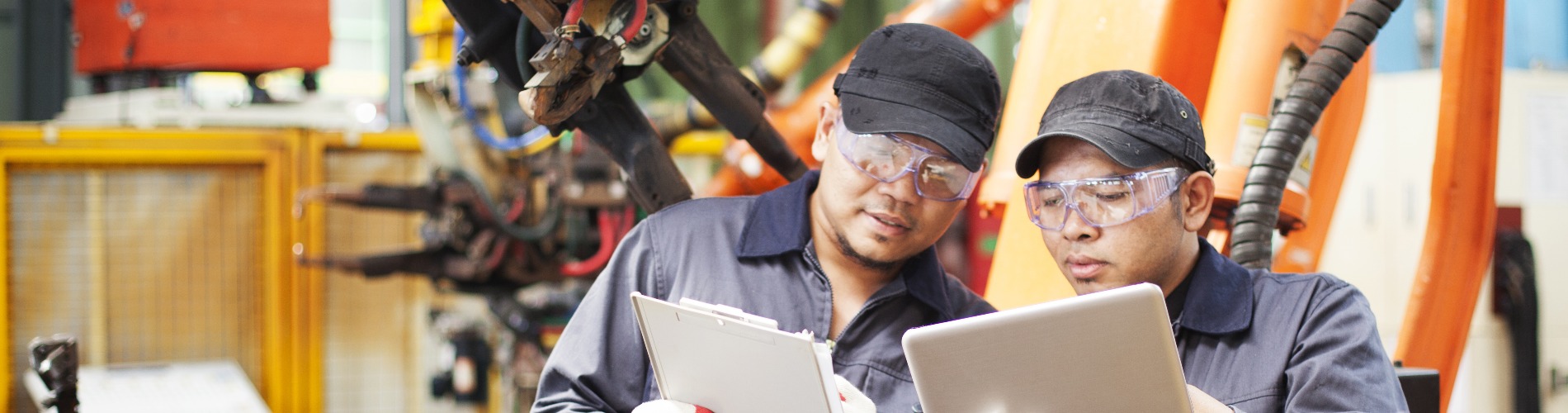
While there are some who assume that robots are replacing workers and putting people out of jobs, the reality is not so simple. There is often a clear division of labor between robots and human workers in many manufacturing settings.
Robotics in manufacturing requires skilled workers to work alongside and with those robots. So, while the division of labor between robots and humans is certainly changing, robots are actually creating jobs in many instances.
But what does this new division of labor look like? Well, let’s get into that a bit.
Many of the More Dangerous Tasks Are Being Handled by Robots
In some instances, the division of labor between robots and humans has made things safer. These days, robots have taken over many of the more dangerous tasks that used to be handled by workers. For instance, the lifting and moving of incredibly heavy parts and materials is now often performed by robots.
One industry that we can look to for an example is the automotive manufacturing industry. This was one of the first industries to adopt robots for automation, and these days, automotive factories are among the most technologically advanced places out there.
Robots in these factories are frequently used for things like welding, transporting materials, sanding and spray painting, all things that used to be done by humans. As you can imagine, there were plenty of on-the-job injuries while performing these tasks. Welding leads to burns, spray paints can cause unsafe breathing conditions, etc. By handing these tasks over to robots, the safety risks to humans are greatly diminished.
However, when it comes to the division of labor between robots and humans, there are tasks that robots simply can’t handle. AI-driven robotics is pretty limited, for instance, in situations that require weighing options to find the best solution to a problem. For example, if AI is trying to weigh between using one of two similar parts for assembling an item, and there hasn’t been a clear definition of the correct item to use, it will be unable to select the best option on its own. That means there still has to be human intervention to create specific rule-sets that shape the artificial intelligence’s behaviors.
It also struggles to account for less tangible factors, such as brand image or customer relations. There won’t be any robots designing marketing campaigns or handling relationships with suppliers any time soon.
Trained Robotics Workers Are a Necessity
Despite the amazing advancements we’ve seen in robotics, people are still needed to work with and alongside these spectacular machines.
Trained workers are needed to operate the robots, to program them, to troubleshoot them, and to maintain them. On top of that, there are still plenty of manufacturing tasks that have to be done by people. Like mentioned above, any kind of complex problem solving is still the domain of human minds, at least for the foreseeable future.
On top of all that, we’ll always need people to design the robotics systems in manufacturing plants and design and program the robots themselves.
At the end of the day, despite all of their power and programming and artificial intelligence, robots are tools. Sure, they’re highly complex and versatile and wonderful tools, but tools nonetheless. As with any tools, people have to be trained to use them. As these robotic tools become more and more pervasive in manufacturing, more people have to be trained to use them.
That’s where you come in.
You Can Become a Robotics Worker
There are a lot of reasons to start a career in robotics. It’s an exciting field that exists on the absolute cutting edge of technology. The need for workers is high, making it a secure career. A robotics salary is great, even in an entry level robotics job, and it’s a challenging job that requires constant learning and adaptation.
More importantly, it’s not as difficult to enter as you might think. In fact, having an interest in robotics is the most important starting point.
So where do you go from here? Well, simply create a profile and head to our education search tool on the RoboticsCareer.org homepage. Here you can search through thousands of programs all around the country, filtering by your location and the kind of program you’re looking for. From there, the rest will be history while you join the workforce of the future.
About The Author
John Zappa
John Zappa is the Director of Product Management at the Advanced Robotics for Manufacturing (ARM) Institute. In this role, he is responsible for developing and promoting services that help the organization fulfill its mission to train and empower the manufacturing workforce for careers in robotics.
An industry expert on lifelong learning, John has spoken at numerous industry conferences including Chief Learning Officer Symposium, Society of Human Resource Management, and The Conference Board, and has co-authored articles on corporate tuition assistance programs and talent management.
During his career, he helped to found and serve as CEO of EdLink, LLC a leading provider of tuition assistance management services. Under John’s leadership, EdLink grew to manage over $220 million in education funding. The firm was acquired by the Fortune 500 firm Bright Horizons Family Solutions (BFAM). A pioneer in the field, he created the industry’s first education network to address the rising cost of education for adult learners. It is now considered the industry standard.
With thirty years’ experience, John has built and led marketing, operations, and product management teams in software-based companies across multiple industries. John began his career at IBM implementing robotics as a manufacturing engineer. He received his Bachelor of Science Degree with University Honors in Mechanical Engineering at Carnegie Mellon University and his MBA from Dartmouth College.

RoboticsCareer.org is powered by the ARM (Advanced Robotics for Manufacturing) Institute, a Manufacturing Innovation Institute part of the Manufacturing USA Network. RoboticsCareer.org was created through collaboration with the ARM Institute’s member organizations spanning industry, government, and academia. Funding was provided by the U.S. Department of War and a grant from the U.S. Department of Labor.
