
News and Events
The robotics industry is constantly changing and evolving. New robotics technologies and developments in automation are quickly creating exciting career opportunities at every education level – from micro-credentials to PhDs. Here is where you can learn more about robotics careers in manufacturing and how these new technologies are benefiting workers
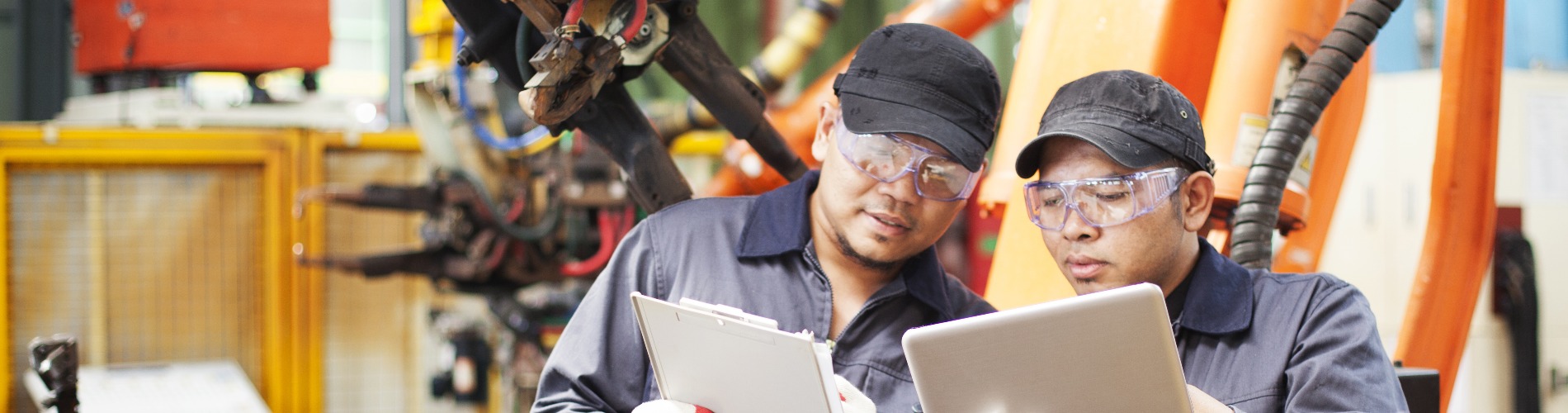
NEWS
How Will Robotics Evolve Beyond 2026?
By John Zappa | April 8, 2026Robotics is a rapidly advancing field. In this article, we explore a few of the ways that robotics may evolve in the next few years. We’ll look at the future of robots in manufacturing, along with evolving technologies like artificial intelligence.
The Future of Robotics in Manufacturing
One of the most exciting applications of robotics is in manufacturing. Robotics has already transformed manufacturing and created many job opportunities. As robotics continues to evolve, these careers will only become more commonplace in the years to come.
There are a few reasons for this. First, robotics can automate repetitive tasks, which helps to improve efficiency and consistency. Second, robotics can improve quality control by ensuring that products are made to specifications. Finally, robotics can be used to create customized products, including one-of-a-kind items.
All of these factors will continue to drive manufacturing's adoption of robotics beyond 2026.
Artificial Intelligence
One of the most important aspects of robotics is artificial intelligence. This technology is what allows robots to interact with their environment and make decisions. In the future, we can expect artificial intelligence to become even more advanced.
Robots will be able to communicate with each other and share information. They will be able to learn from experience and adapt to new situations.
For example, a robot may be able to autonomously choose the best tool for a task or plan out a manufacturing process. This will allow robotics to become even more efficient and effective.
The Industrial Internet of Things
The industrial Internet of Things (IoT) is another exciting area of robotics that highlights how robotics will evolve beyond 2026. IoT refers to the interconnectedness of devices and machines in a manufacturing or industrial setting.
In the future of robotics, we can expect the IoT to become even more widespread. The future of robotics will see more and more devices connected to each other and to the internet. This will enable better communication and coordination across different parts of a manufacturing process.
For example, if one machine breaks down, other machines can automatically adjust to compensate for production loss. This will lead to a more efficient and effective robotics industry overall.
Collaborative Robotics
Collaborative robotics is an exciting area of robotics that will continue to evolve beyond 2026. Collaborative robots, or cobots for short, are distinct from industrial robots in that they can work closely alongside humans.
In the future of robotics, we can expect collaborative robotics to become more common. Robots will be used more and more in settings such as hospitals, schools, and factories. They will work alongside humans to help with tasks such as lifting heavy objects, cleaning, and performing menial work tasks.
For example, a collaborative robot could be used to lift heavy materials in a manufacturing plant and move them from one place to another.
These are just some examples of how robotics will evolve beyond 2026. It is an exciting time for the robotics industry, and we can expect to see many more advancements in the years to come.
If you’re interested in becoming a part of that future as a robotics worker, then you’re in the right place. Create a profile today and search a database of thousands of robotics training and robotics education programs nationwide to find the best fit for you.
About The Author
John Zappa
John Zappa is the Director of Product Management at the Advanced Robotics for Manufacturing (ARM) Institute. In this role, he is responsible for developing and promoting services that help the organization fulfill its mission to train and empower the manufacturing workforce for careers in robotics.
An industry expert on lifelong learning, John has spoken at numerous industry conferences including Chief Learning Officer Symposium, Society of Human Resource Management, and The Conference Board, and has co-authored articles on corporate tuition assistance programs and talent management.
During his career, he helped to found and serve as CEO of EdLink, LLC a leading provider of tuition assistance management services. Under John’s leadership, EdLink grew to manage over $220 million in education funding. The firm was acquired by the Fortune 500 firm Bright Horizons Family Solutions (BFAM). A pioneer in the field, he created the industry’s first education network to address the rising cost of education for adult learners. It is now considered the industry standard.
With thirty years’ experience, John has built and led marketing, operations, and product management teams in software-based companies across multiple industries. John began his career at IBM implementing robotics as a manufacturing engineer. He received his Bachelor of Science Degree with University Honors in Mechanical Engineering at Carnegie Mellon University and his MBA from Dartmouth College.

RoboticsCareer.org is powered by the ARM (Advanced Robotics for Manufacturing) Institute, a Manufacturing Innovation Institute part of the Manufacturing USA Network. RoboticsCareer.org was created through collaboration with the ARM Institute’s member organizations spanning industry, government, and academia. Funding was provided by the U.S. Department of War and a grant from the U.S. Department of Labor.
