
News and Events
The robotics industry is constantly changing and evolving. New robotics technologies and developments in automation are quickly creating exciting career opportunities at every education level – from micro-credentials to PhDs. Here is where you can learn more about robotics careers in manufacturing and how these new technologies are benefiting workers
NEWS
What Entry-Level Robotics Jobs Actually Look Like in Manufacturing
By John Zappa | July 23, 2026When people think about working with robotics, what they picture is someone working with code on a laptop. However, in manufacturing, the entry-level robotics jobs are the one’s happening a few feet from a running cell.
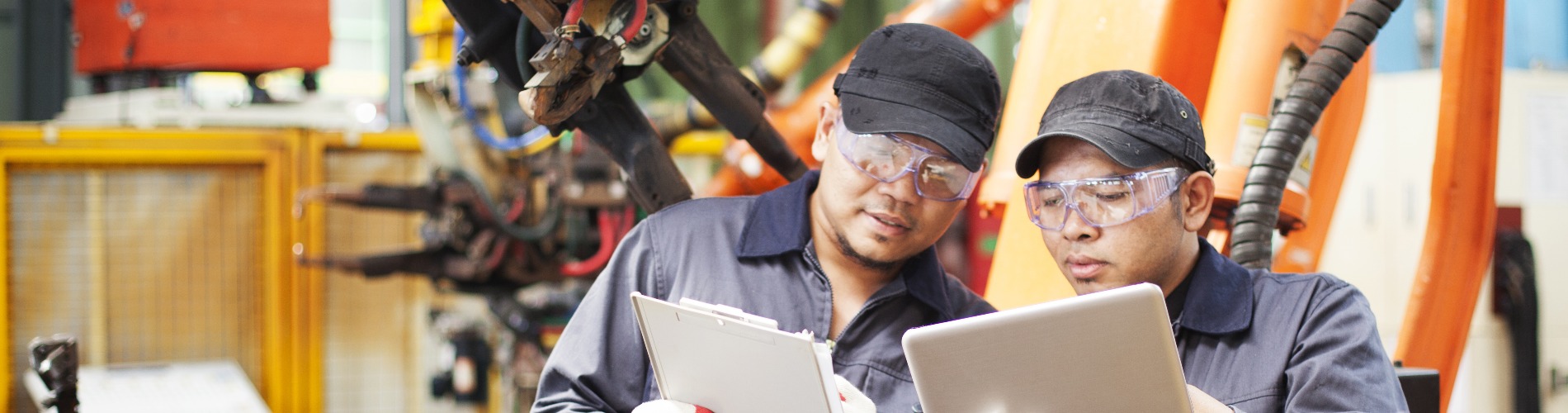
A new hire may load parts, check finished pieces, answer alarms, or call maintenance after a robot stops mid-cycle. One shift may involve a crooked part in a fixture. Another may involve a sensor that missed its signal. An entry-level robotics job is often practical and pretty noisy.
Entry-level robotics jobs focus on equipment already in use: operating it, maintaining it, and troubleshooting problems before downtime spreads.
Job Titles Change From Plant to Plant
Robotics job titles can be a little slippery. One plant may post a Robotics Automation Technician role. Another may use Robotics Technician for work that looks almost the same once you read the duties.
You may also see postings for Robot Operator, Assembly Operator, Mechatronics Technician, or Industrial Maintenance Technician. In other shops, the title may lean toward Controls Technician or PLC Technician. Different words, similar floor problems.
That is why the title should never be the only thing you check. Read the daily tasks. Look for robot cells, sensors, PLCs, conveyors, safety resets, quality checks, and maintenance records. An entry-level robotics job with “maintenance” in the title may still have you working alongside automated equipment all day.
RoboticsCareer.org can help sort this out. You can compare career paths, review the skills tied to different roles, and connect job names with the work they actually describe. Titles vary. The work tells the real story.
What Work You’ll Be Doing in an Entry-Level Robotics Job
The shift starts with a quick handoff. Someone mentions that one robot paused twice during the night. Another station ran without any trouble. You grab your safety gear, check the production schedule, and head toward the cell.
The first hour may pass without much excitement. Parts move through the system. You load material, watch production output, inspect finished pieces, and keep an eye on alarms. Then something changes. A robot stops because a sensor fails to detect a part. Production waits. You check the fault message, inspect the area, replace the worn sensor if needed, and work with a senior technician to get the cell back online.
Later in the shift, preventive maintenance takes priority. A gripper needs attention. Tooling shows wear. You record the work, update the maintenance logs, and verify that everything operates as it should before the line starts again.
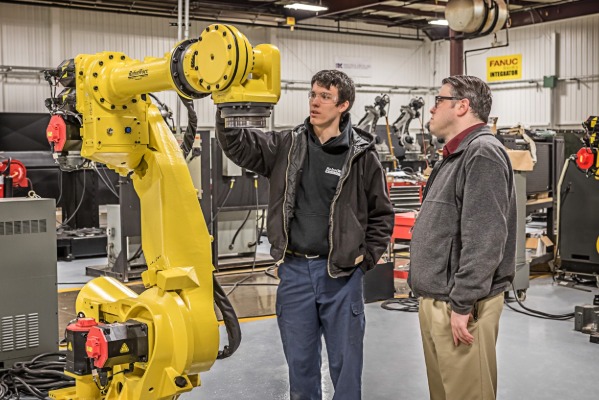
Some days bring larger problems. A robot path needs a small adjustment after a fixture change. That work usually happens under the guidance of a more experienced technician. You watch closely, ask questions, and begin to understand why a small change in movement can affect quality across an entire run.
Production rarely follows the same pattern two days in a row. One morning stays calm. Another turns into a string of alarms that seem to arrive back-to-back. That variety is part of the job.
Nobody handles those moments alone. Operators, maintenance technicians, engineers, and supervisors work through issues together because every person sees the equipment from a different angle.
One thing becomes obvious pretty quickly. Troubleshooting skills grow faster than confidence. After enough shifts, problems that once seemed overwhelming start to become easy to solve. That’s the point where an entry-level robotics job turns into a career.
The Skills Employers Notice Early
During an entry-level robotics job, employers will generally notice the small stuff first.
A new tech spots an air leak near a cylinder. Good sign. Another one checks a schematic before pulling a wire. Better sign. Someone pauses long enough to ask why the sensor fault came back twice in one hour. That gets attention.
The early skills are practical. Mechanical aptitude helps you understand motion, wear, and alignment. Electrical basics help with sensors, panels, and control signals. Hydraulics and pneumatics come up on plenty of automated systems. PLC awareness helps you follow what the machine is trying to do. Robot safety remains a priority every day, especially during resets and maintenance.
Software knowledge helps too, even at a basic level. Sometimes the problem lies in a setting, a fault history, or a missed input on the screen.
Employers also watch how you handle pressure. Can you explain what happened during handoff? Did you write notes that the next shift can use? Do you ask smart questions before touching equipment?
Nobody expects perfection on the first day of your entry-level robotics job. They look for steady learning.
RoboticsCareer.org organizes robotics careers around industry-defined competencies. Job seekers can compare those competencies with robotics roles, understand what employers expect, and build skills that connect directly to work performed on modern manufacturing lines.
How Most People Get Started
People enter robotics from more than one doorway. Some start with a high school diploma or GED and then learn through employer training, while others complete a certificate program at a community college or a program like NC3 Certification before applying for a robotics job.
The Bureau of Labor Statistics notes that many electromechanical and mechatronics technicians enter the field with a postsecondary certificate or an associate degree. Apprenticeships offer another path, with classroom lessons and paid work on real equipment.
A hiring manager’s expectations depend on the role. A robot operator job may ask for a different background than a controls-heavy technician position. Local employers, nearby equipment, and your past work all change your options.
RoboticsCareer.org provides job seekers with a practical platform to compare more than 18,000 robotics and physical AI programs. It also marks ARM Endorsed programs, which meet industry-reviewed standards.
Plenty of robotics automation technicians find their favorite specialty after a few months on the floor. That is pretty normal.
Where Entry-Level Robotics Jobs Can Lead
An entry-level robotics job can open a lot of doors.
RoboticsCareer.org groups manufacturing robotics careers into three main paths. Many people’s entry-level robotics job is in a Robotics Technician position. That role stays close to the equipment. You help keep machines running, respond to faults, support repairs, and protect production time.
After that, some workers move toward Robotics Specialist roles. The work reaches across more systems. A specialist may help with diagnostics, safety reviews, quality problems, or performance improvements across a cell.
A Robotics Integrator works further upstream. Integrators help plan automation projects, review workflows, connect equipment, and support new system launches.
Each role builds from the last. You add skills as you go.
RoboticsCareer.org connects these paths with competencies, training programs, internships, and job openings. That makes the next step easier to understand. A clear skill list beats vague career advice every time.
Build Your Robotics Career Around Real Skills
A robotics career grows through experience, one shift at a time. Entry-level robotics jobs in manufacturing center on operating equipment, solving production problems, supporting the team, and building technical ability through real work. One day, you replace a sensor. Another day, you help track down a fault that stopped an entire cell. Those moments add up.
Keep your focus on skills rather than job titles. Troubleshooting, safety, controls, maintenance, and communication transfer from one employer to the next and across many automation systems.
Create a free profile on RoboticsCareer.org to explore manufacturing robotics career paths, find the best robotics training program and best robotics schools for your goals, track the skills employers want, and discover entry-level robotics jobs that match your experience and career goals.

RoboticsCareer.org is powered by the ARM (Advanced Robotics for Manufacturing) Institute, a Manufacturing Innovation Institute part of the Manufacturing USA Network. RoboticsCareer.org was created through collaboration with the ARM Institute’s member organizations spanning industry, government, and academia. Funding was provided by the U.S. Department of War and a grant from the U.S. Department of Labor.
