
News and Events
The robotics industry is constantly changing and evolving. New robotics technologies and developments in automation are quickly creating exciting career opportunities at every education level – from micro-credentials to PhDs. Here is where you can learn more about robotics careers in manufacturing and how these new technologies are benefiting workers
NEWS
How to Find Robotics Apprenticeships and What to Expect
By Lisa Masciantonio | October 8, 2026Across the robotics industry, the demand for people who can do work well continues to grow.
One of the most direct ways to build that kind of capability is a robotics apprenticeship. Alongside experienced professionals, you develop skills on actual equipment, get a real sense of what careers like robotics technicians, maintenance professionals, and systems integrators look like, and work toward full competency before you’re on your own. For anyone considering a career in advanced manufacturing, this practical exposure is critical.
What Are Robotics Apprenticeships?
A robotics apprenticeship puts real work and technical training together, letting you try the work out before committing to a longer education path. You learn a concept in class, then apply it to real equipment on the job. Apprentices learn concepts and then apply them at work. In an apprenticeship, your time may be split between coursework, a classroom, a training lab, and the manufacturing floor.
Some programs focus on entry-level skills. Others may cover system support, integration, programming, controls, or automation in more depth.
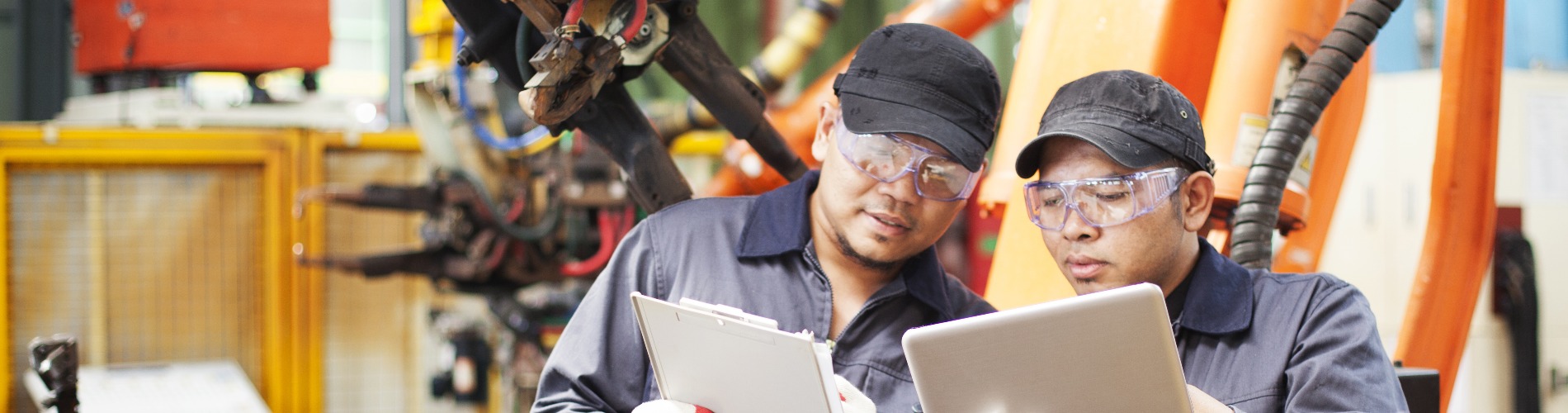
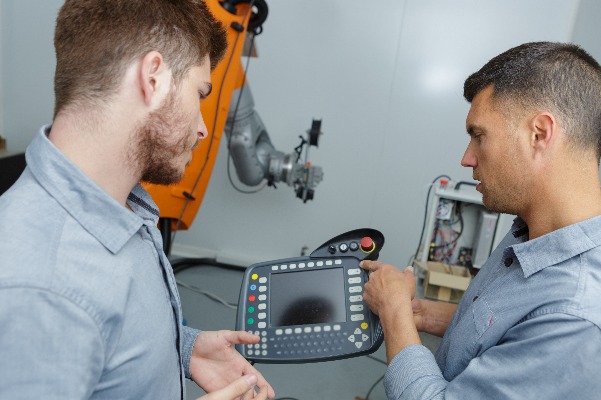
You will get hands-on experience, which might entail shadowing a technician during a repair, replacing parts, testing safety systems, reviewing error codes, checking sensors, or inspecting robot cells.
Some days feel exciting because you help solve a real problem. Other days are slower, with basic maintenance, repeated checks, documentation, and safety reviews.
Program content often reaches across the whole cell. You may learn mechanical repair, controls, sensor checks, robot operation, safety work, troubleshooting, maintenance routines, basic code, and production records. Those skills carry into several robotics jobs.
What You Get From a Robotics Apprenticeship
An apprenticeship puts you on the floor, providing you with a good understanding of what work suits you best. Some tasks grab you. Some don't. You find out which is which fast.
For some, maintenance & troubleshooting click right away. Others get pulled toward programming: the logic of it, the way a small code change produces a real physical result. Others end up chasing bigger questions: how the robot cells connect, who plans the floor layout, who decides where automation goes.
The real value of an apprenticeship comes down to this: hands-on access to the equipment, and a close look at how technicians with years of experience solve problems, before you've settled on a direction.
What to Expect During a Robotics Apprenticeship
Program length varies. Depending on the employer and the credential attached, a robotics apprenticeship can run one year or stretch to four. Some programs stay short and aim only at entry-level skills. Others run longer & take you deeper into a role.
Part of your time is spent on hands-on work on the manufacturing floor. The rest goes to classroom training, labs, online modules, or structured coursework.
Common learning areas may include:
- Robot operation and safety
- Preventive maintenance
- Basic programming concepts
- Troubleshooting and repair
- Electrical and mechanical systems
- Sensors, controls, and automation equipment
- Manufacturing processes
- Documentation and communication
Some days may feel exciting. Some days you crack a code — the robot moves the way it should, the fix holds, and the line runs clean. Other days, you label parts, repeat basic tasks, review safety procedures, or work through equipment issues that take longer than expected.
Through repetition, real exposure, and coaching, apprenticeships build skill. The small tasks teach you how the larger systems work.
What the Day-to-Day Work Can Look Like
A day in the life of a robotics apprentice rarely looks the same twice. You check work orders, inspect robot cells, test sensors & shadow technicians. Sometimes you help with repairs when a machine stops working right.
The work changes based on what the production team needs that day. You might watch a robotic arm move parts around a cell. Later, you figure out why a system stopped mid-cycle or why a sensor missed a part. Technicians walk you through how to spot problems and work out solutions.
You also replace parts, check connections, test motors, and log what you did once the fix holds.
Some apprenticeship programs focus on programming and setting up systems. Others focus on keeping machines running and fixing them when they break. Most robotics technician apprenticeships teach you about how mechanical systems, electrical components, controls and software all work in a factory.
If you like working with your hands, solving problems and learning about technology, then this kind of apprenticeship might be a choice for you. You learn by doing the work, asking questions and seeing how the equipment works when everything is running on a schedule.
How To Stand Out When Applying to a Robotics Apprenticeship
Read the job description before you do anything else. Employers basically hand you a cheat sheet — they tell you exactly what they want, so use it. Match your background to their list, even if the connection feels like a stretch.
Think about everything you've done that touches manufacturing, electrical work, programming, safety, or troubleshooting. School projects count. So does fixing your car, building a PC, or messing around with Arduino on weekends. Or perhaps you've been involved in robotics competitions. An apprenticeship is a natural step to apply those competition skills in a real-world environment.
Swap out vague language. "Good with tools" doesn’t showcase your skills. But "rebuilt a small engine, including diagnosis and reassembly?" — now we're talking. The same goes for interest-based claims. "Interested in automation" is easy to write and easy to ignore. Hearing that you "completed a 40-hour PLC course on Coursera" would interest a hiring manager.
Pull out a dedicated skills section and list everything concrete: machines you've operated, software you know — CAD, Python, ladder logic, whatever applies — and any certifications you hold. Even free online completions are worth mentioning. A completed profile on RoboticsCareer.org can help. Fill out your skills and experience so employers on the platform have a clearer picture of what you already know and where you could fit.
Apprenticeship programs exist to train people who are still learning, so you don't need a perfect resume. You need one that's specific, honest, and shows you took the application seriously. That alone puts you ahead of most people in the pile.
Questions to Ask Before You Commit
Before you accept an apprenticeship, ask a few questions:
- How long is this program?
- What credential or certification can I earn?
- Are tools, books, exams or transportation costs covered?
- How much time is spent on hands-on work versus in class?
- Who will mentor me?
- What career paths have past apprentices followed after completion?
- What kind of equipment will I be working with?
- How does compensation work? Does it increase as I gain skills?
Robotics Apprenticeships Can Lead to More Than One Career Path
Here's some of the career paths an apprenticeship can take you:
Robotics Technician
The most common starting point. You maintain equipment, troubleshoot faults, replace components, and keep production running. For many people, this is a solid long-term career — not just a stepping stone.
Robotics Specialist
A step broader than technician work. Specialists track recurring faults, improve cycle performance, support vision systems, and dig into quality issues tied to automation cells. You spend more time thinking about how systems interact than fixing individual components.
Robotics Integrator
Integrators work further upstream. They help plan automation projects, connect equipment, review layouts, and support deployment across production. The work combines technical knowledge with process planning and cross-team coordination.
Automation or Manufacturing Engineer
With additional education, an associate degree, a bachelor's degree, or targeted certificates, some technicians move into engineering support roles.
AI Data Technician
AI Data Technicians prepare the information that AI systems use. You check data for accuracy, clean up problems, and prepare it for use in manufacturing AI applications.
AI Implementation Specialist
AI Implementation Specialists bring AI systems onto the manufacturing floor. You help integrate and deploy AI solutions, then support those systems once teams begin to use them in production.
AI Developer
AI Developers create software and machine learning solutions for manufacturing problems. Their work can include software that automates tasks or uses manufacturing data to solve production problems. This path usually calls for deeper programming and machine learning skills.
Take Your First Step Into Robotics
Robotics apprenticeships suit people who want a career tied to the future of manufacturing, technical and hands-on. From workers, you learn real skills and see how robotics functions outside a video or textbook.
Start with RoboticsCareer.org. Create a profile, search for apprenticeship opportunities, review robotics career paths and explore training providers. When you find a fit, you can save listings and easily apply.
About The Author
Lisa Masciantonio
Chief Workforce Officer
Advanced Robotics for Manufacturing (ARM) Institute
Lisa Masciantonio is the Chief Workforce Officer for the Advanced Robotics for Manufacturing (ARM) Institute. She joined the ARM Institute in May 2017 as the Director of Membership and Outreach. She moved to the position of Chief Workforce Officer in 2019 and she is responsible for driving the Education & Workforce Development vision for ARM in conjunction with the ARM membership, the federal and state government partners, and other expert stakeholders.
Lisa brings with her over 25 years of experience as a performance-driven leader with notable success in cultivating and executing business strategies and formulating long-term strategic client relationships. She has proven success in developing business solutions, commercialization of products, technology transfer, and technological initiatives that have supported organizational growth, improved staff productivity, and increased value to many communities of practice. Critical to her success is the ability to increase awareness and drive thought leadership position by designing and executing innovative programs as well as developing and launching new, value-add offerings for ongoing competitiveness. Lisa received a Bachelor’s degree from the Pennsylvania State University and 2 Master’s degrees from Carnegie Mellon University.
In 2021, Lisa was recognized as one of 20 world-wide Exceptional Women in Robotics and Automation by SME. In 2022, she was recognized by the Pittsburgh Business Times as a Women of Influence and was also part of the inaugural Technical.ly Pittsburgh RealLIST Connectors list, which recognizes the top 100 influential leaders in Pittsburgh tech.

RoboticsCareer.org is powered by the ARM (Advanced Robotics for Manufacturing) Institute, a Manufacturing Innovation Institute part of the Manufacturing USA Network. RoboticsCareer.org was created through collaboration with the ARM Institute’s member organizations spanning industry, government, and academia. Funding was provided by the U.S. Department of War and a grant from the U.S. Department of Labor.
